
Dr. Jerusha Overton
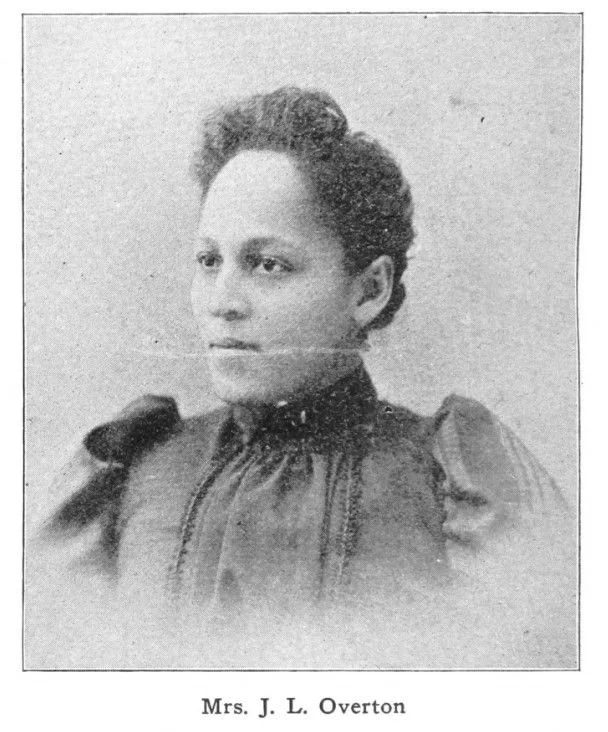
Dr. Jerusa Louise Overton (1862 – 1920) was a Luzerne County’s first African American physician, who operated a prominent and successful medical practice and business in Wilkes-Barre.
Born and raised locally and educated in public schools, she attended Syracuse University to study music and was reportedly a talented vocalist. She returned to Wilkes-Barre in 1882, and soon became well known in Wilkes-Barre, active in the local A.M.E. Zion Church on Northampton Street, and was often invited to sing at various public events.
In 1883 she married Dr. George E. Overton, a veterinarian and son of one of the most prominent African American business owners in the area, Charles C. Overton. She, too, became interested in medicine and eventually studied and graduated from the New York and Broadway School of Chiropody and Dermatology, holding a postgraduate certificate and diploma. Chiropody was the common term at the time the specialty now known as podiatry – for specialist for the foot, ankle and leg. During that period, the specialty was often linked with dermatology as well.
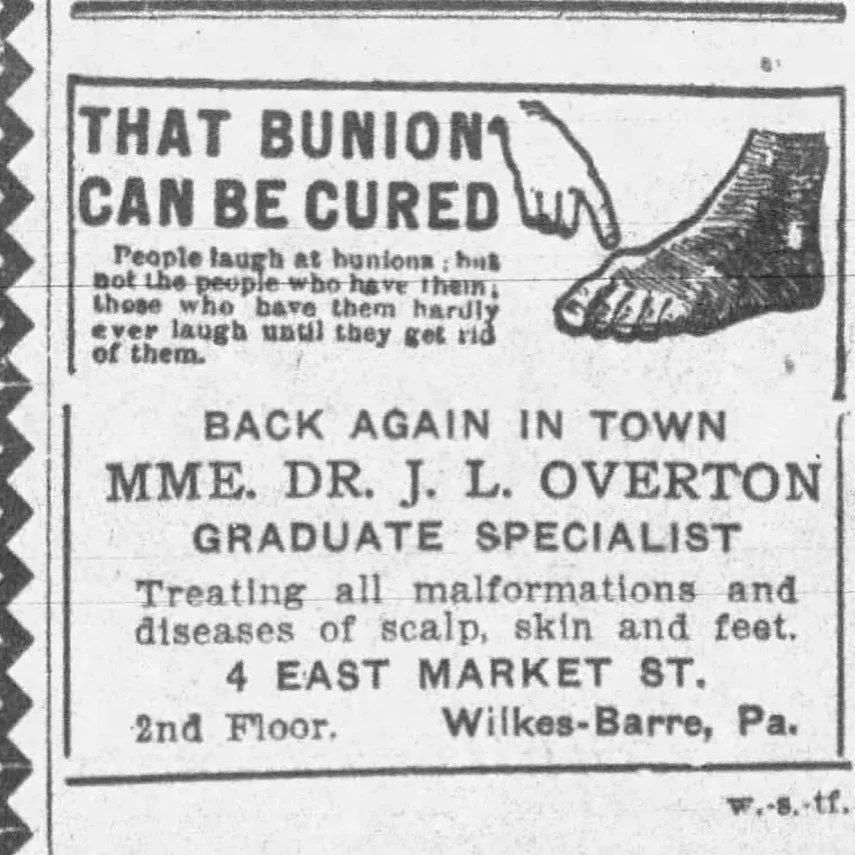
Dr. Overton’s offices were prominently located at 4 East Market Street just off Public Square. The newspaper at the time mentioned her office was “equipped with all the modern appliances.”
In addition to her medical practice, Dr. Overton operated a community-focused retail business of beauty products marketed to women of color. She developed a line of proprietary products and employed African American women as “beauty culturalists” to market her products in the black community. By using a direct sales model, she offered opportunity to other women to enhance their income through the product distribution. Eventually, she incorporated mail-order purchase options for her skin care items as well.
Dr. Overton used her prominence and professional stature to become an advocate for social change for both women and the minority community during her lifetime. Her involvement in local and statewide organizations gave her a platform to serve as an advocate for racial and gender recognition.
The Times-Leader noted in her 1920 obituary, “Her address at the recent State meeting of the Masons at Scranton principals of the Eastern Star was highly commended. She was greatly interested in promoting race interests and enterprises. In her special work as chiropodist, she took high rank.”
Page Sponsored by
